
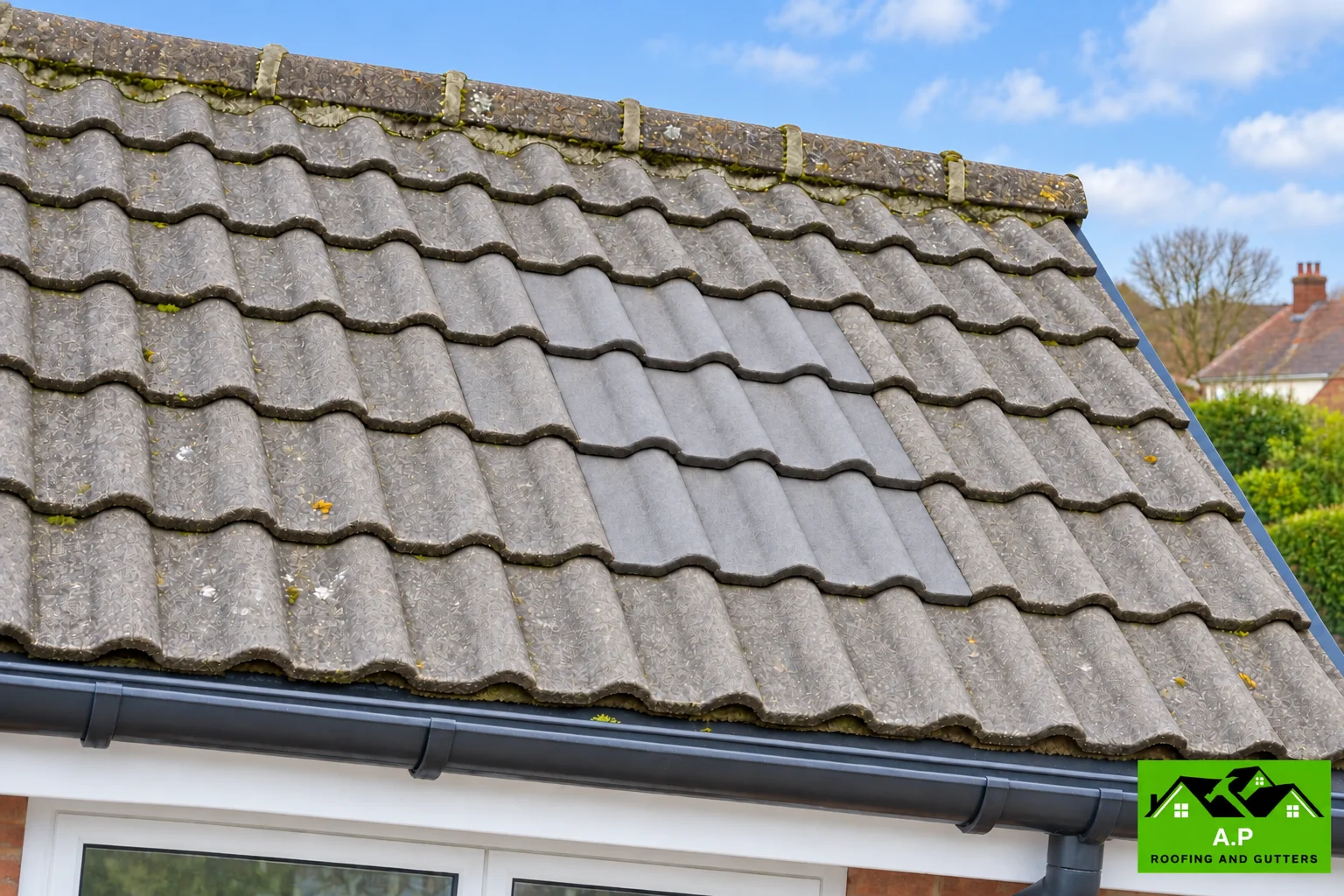
A roof leak is a symptom, not a diagnosis. The water mark tells us where moisture became visible, but wind, gravity and hidden layers may have moved it several metres from the entry point.
Our leak investigations around Crawley combine the external roof details with what can be seen in the loft or ceiling area so the repair targets the actual route of water.
Information that helps trace a leak
When did the leak first appear? Does it happen in light rain or only heavy wind-driven rain? Is it immediate or delayed? Did it start after a storm, solar installation, chimney work or loft conversion? Those details can narrow the likely entry point before anything is opened up.
Photographs of the internal stain over time can also show whether the affected area is growing or moving.
Common leak locations on pitched roofs
Chimney flashings, wall abutments, valleys, rooflights, vents, slipped coverings and ridge or verge defects are common routes. Gutters can also mimic a roof leak by overflowing back into the eaves or wall.
We inspect the surrounding area because the first visible crack is not always the only defect.
Common leak locations on flat roofs
Edges, outlets, seams, penetrations, rooflights and transitions into walls are frequent weak points. Ponding may expose a small defect to prolonged water pressure that would not matter on a freely draining roof.
Where the deck is soft or moisture is trapped, a surface patch alone may not address the damage below.
Leak or condensation?
Condensation can wet roof timbers and ceilings without rainwater entering from outside. It often correlates with cold weather, high indoor humidity or changes to loft insulation and ventilation.
If the pattern does not match rainfall, we consider ventilation and moisture movement rather than forcing a waterproofing repair onto the wrong problem.
Emergency control versus permanent repair
During severe weather the immediate priority may be to limit internal damage and make the roof safe. Permanent repair should follow when materials are dry enough and access is safe enough for the detail to be rebuilt properly.
A temporary patch is useful when it is clearly treated as temporary, not when it quietly becomes the finished job.
Build a timeline before opening the roof
A leak that appears within minutes of a downpour may behave differently from damp that develops after days of persistent rain. Wind direction, seasonal timing and recent building work are useful clues. Keep photos of the internal mark and note whether it dries between events. We use this history alongside the external inspection to narrow the likely source, especially when the roof looks sound during a dry visit.
Check connected details rather than isolated defects
A chimney may have sound visible flashing but failed soakers or an obstructed back gutter. A flat-roof leak may enter at a wall termination and travel across the deck. Water at an eaves corner may originate in overflowing drainage. Investigation follows these connections and considers whether more than one defect is present. If selective opening or further investigation is needed, the purpose and scope should be agreed rather than making unexplained holes in the covering.
Know what success looks like
The aim is to stop the identified route of water and restore the affected detail against sound surrounding material. Internal staining may remain after drying, so redecorating should wait until the area is dry and there is confidence no fresh water is entering. A repair record should identify what was addressed and any separate concerns that still need monitoring.
Questions homeowners often ask
Often, yes. Staining, damaged details and the likely water path can be inspected in dry conditions. Some intermittent leaks are easier to confirm when weather patterns are known.
Water may be stored in insulation or roof layers and continue moving after rainfall ends. That delay is common and does not necessarily mean the leak is still actively receiving rain.
Only if it can be done safely without walking on weak ceiling areas or touching electrics. If water is near electrical fittings, isolate the area and seek appropriate electrical advice.
Technical guidance and further reading
What affects the size and cost of the job?
A repair price depends heavily on access and diagnosis. A ten-minute material repair may still need safe roof access, while an apparently small leak can take longer to trace if water has travelled through the roof build-up.
- Height, pitch and safe access method
- Time needed to trace the source of water
- Extent of damage once the area is opened
- Availability of matching tiles, slates or system-specific repair products
- Whether temporary weatherproofing is needed first
- Chimneys, valleys, rooflights or other complex details near the defect
A quote you can actually compare
For repairs, the quote should describe the defect being addressed and the repair area rather than promising to “seal roof” without explanation. Where the exact condition cannot be known until coverings are lifted, the assumptions should be stated clearly.
We prefer defined scopes to vague allowances. If an important part of the roof cannot be confirmed until material is lifted, that uncertainty should be explained before work begins rather than appearing as a surprise at the end.
What we inspect and work on
Leak tracing
Tile and slate repairs
Flashing and chimney junctions
Flat roof splits and seams
Valley and gutter defects
Related roofing services

More questions about this service
Why does the roof leak only when the wind blows one way?
Wind-driven rain can reach laps and junctions that remain dry in ordinary rainfall. The direction is a useful clue to abutments, flashing or exposed edges, but the actual detail still needs inspection.
Can a leak come from somewhere other than the roof?
Yes. Condensation, plumbing, overflowing drainage or masonry defects can resemble a roof leak. If the pattern does not fit rainfall, those possibilities should be considered before specifying roof work.