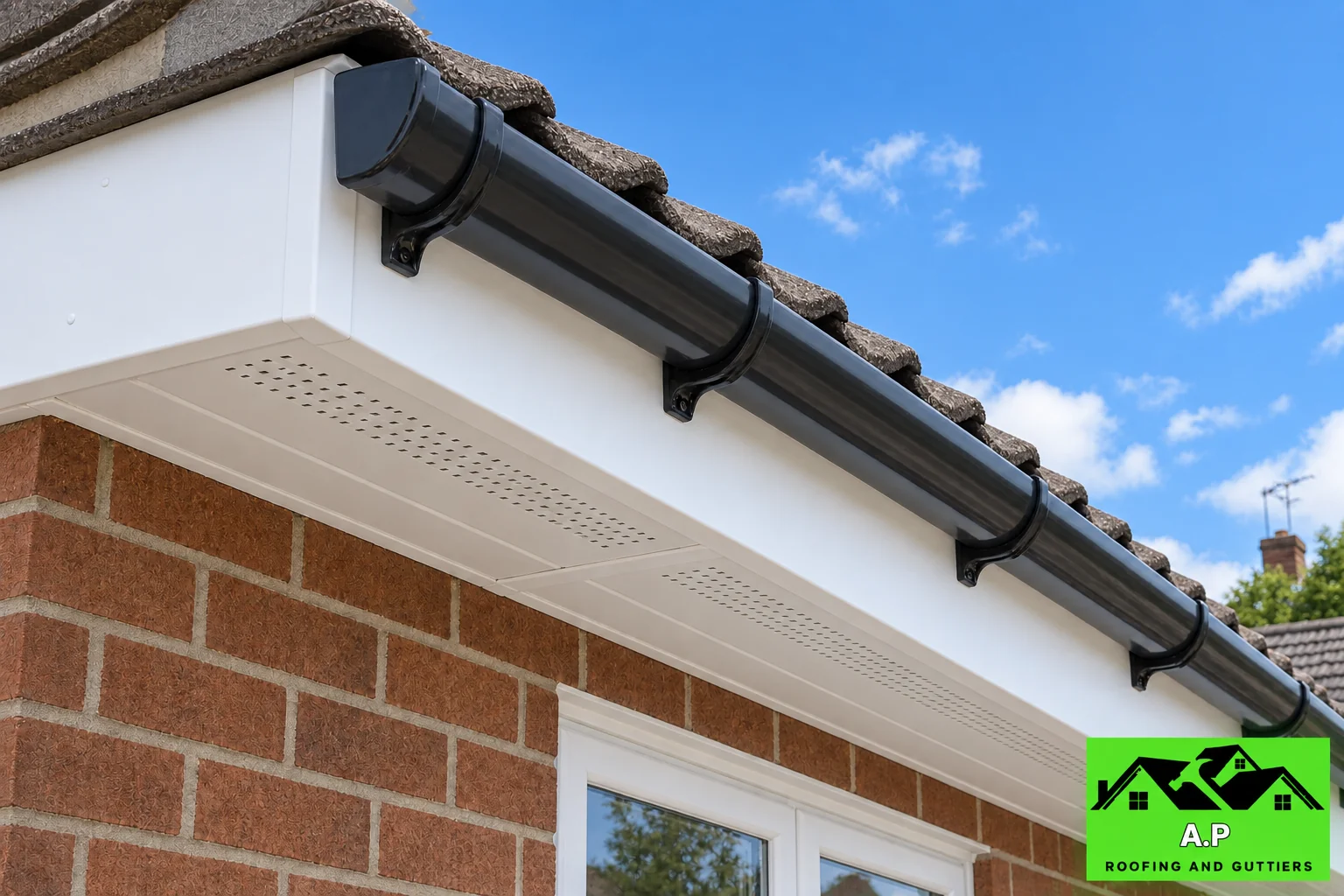
Fascias and soffits form the visible edge of the roof, but they also support gutters, protect eaves and often contribute to roof-space ventilation. Covering rotten timber with a new plastic face can make the roof look tidy while leaving the original defect hidden underneath.
We repair and replace roofline components around Crawley with attention to the eaves and drainage behind them.
What fascias actually do
The fascia provides a finishing edge and commonly supports gutter brackets. It sits in a wet part of the building envelope, so overflowing gutters, failed felt support trays and roof leaks can all cause timber decay.
Before replacing a board we look for the water source and check whether rafter ends or supporting timber have also been affected.
Soffits and ventilation
Soffits close the underside of the eaves and can contain ventilation openings. If those openings are part of a cold-roof ventilation strategy, replacement work must preserve effective airflow.
We avoid treating ventilation slots as cosmetic perforations that can be covered whenever they look inconvenient.
uPVC, timber and capping systems
uPVC roofline products reduce painting maintenance, while timber can be appropriate on character properties or where the original appearance matters. Capping sound timber may be possible, but capping rotten material is not a repair.
The choice should account for the substrate, gutter fixing and ventilation detail.
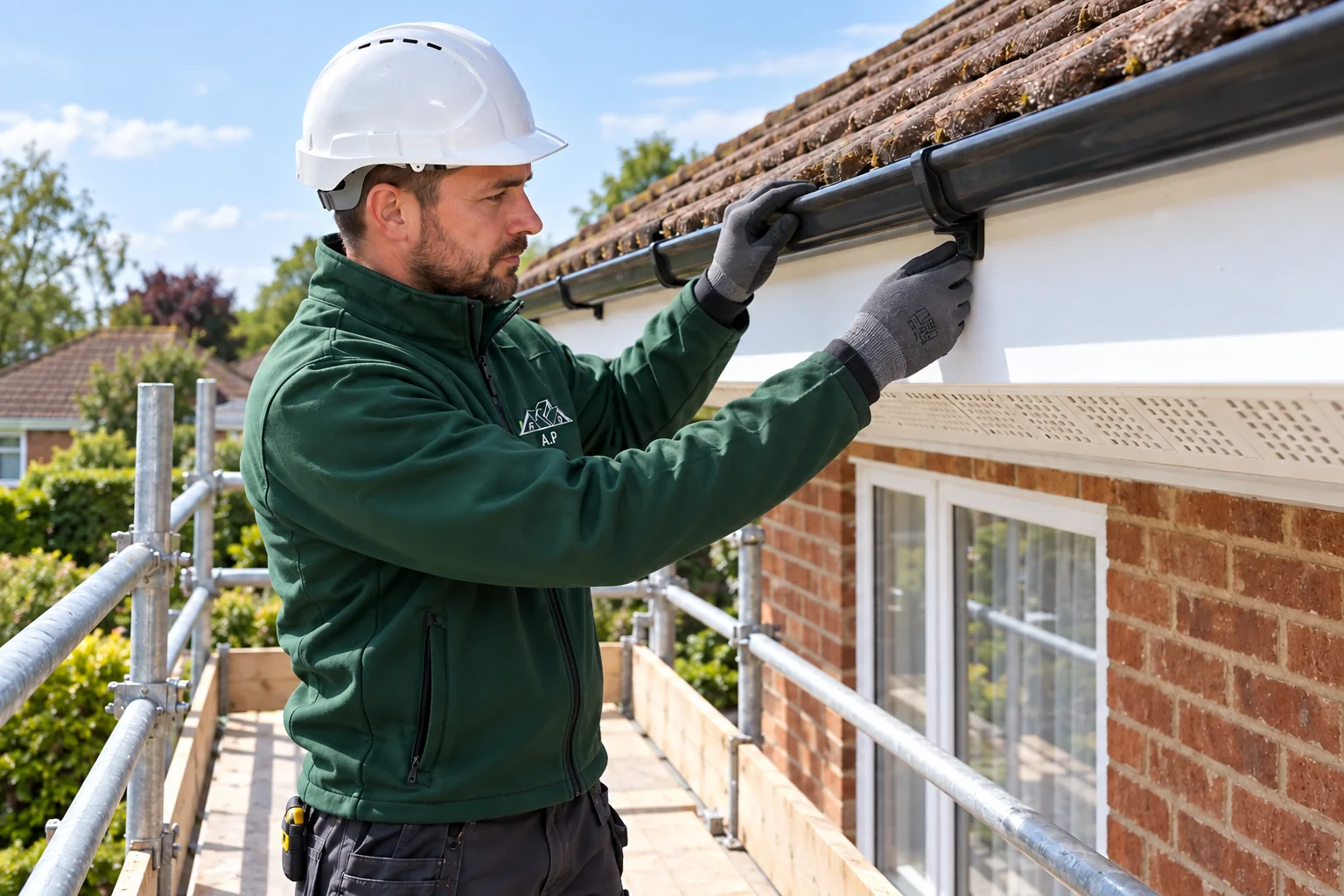
Coordinating gutter replacement
New fascias often mean gutter brackets are being refixed anyway. This is the right time to set the gutter line, check falls, review outlet positions and make sure roof runoff reaches the gutter rather than passing behind it.
Eaves felt or support trays may also need local attention where old underlay has deteriorated at the bottom edge.
Full replacement or covering the existing board?
The appearance of a fascia gives only part of the picture. Before recommending an overcap, the timber beneath must be sound, securely fixed and suitable to retain. A full replacement allows the old board to be removed and the eaves and rafter ends inspected. That can expose decay which was invisible from ground level. The quotation should say which approach is proposed and what happens if hidden defects are found. A new surface over wet or weak timber can leave gutter brackets without reliable support.
Details at corners, verges and eaves
Roofline boards expand and contract, so joints, fixings and corners must suit the chosen product. Where the fascia meets a gable or flat-roof edge, we check how water exits rather than relying on a bead of sealant. Underlay at the eaves may need local support to guide any secondary drainage into the gutter. Vented soffits or over-fascia ventilation must fit the roof design. We also look at how bird guards, gutter brackets and the first tile course meet so the completed edge is tidy and serviceable.
Choosing the finish
White uPVC is a common choice, but colour and profile should work with the windows, gutters and existing roofline. Timber can suit buildings where original details matter. The aim is a consistent elevation with accessible gutters and an airflow route that has been preserved, not a cosmetic change that hides the next maintenance problem.
Questions homeowners often ask
Sometimes, although gutters usually need to be removed and refitted to access the fascia properly. Their condition and alignment should be checked at the same time.
That depends on the roof ventilation design. Where eaves ventilation is required, replacement work should maintain the necessary airflow.
We would not treat capping rotten or structurally unsound timber as a proper repair. Defective material needs addressing first.
Technical guidance and further reading
What affects the size and cost of the job?
Roofline work is usually priced around access, total run length and what is discovered behind the visible fascia or gutter. Rotten supporting timber, blocked downpipes and awkward conservatories or extensions can change a straightforward replacement.
- Total gutter, fascia or soffit length
- Building height and access restrictions
- Condition of fascia timber, rafter ends and eaves details
- Number and position of outlets and downpipes
- Whether gutters can be reused or need replacement
- Ventilation requirements at the eaves
A quote you can actually compare
A useful roofline quote should state whether existing timber is being removed, repaired or capped, how gutters and outlets are treated and whether ventilation is being maintained. That avoids comparing a cosmetic overclad with a full repair as though they are the same job.
We prefer defined scopes to vague allowances. If an important part of the roof cannot be confirmed until material is lifted, that uncertainty should be explained before work begins rather than appearing as a surprise at the end.
What we inspect and work on
Fascia repairs and replacement
Soffit repairs and replacement
Eaves ventilation checks
Gutter support and alignment
Roof-edge timber assessment
Related roofing services

More questions about this service
Can you work above a conservatory?
Usually a suitable access arrangement can be planned, but a conservatory changes the job. We need to see its position and roof type before deciding how the eaves can be reached without placing loads on the structure.
Will new soffits stop birds entering the roof?
Suitable eaves detailing can help close unwanted gaps, but ventilation must remain effective. Any active nesting or protected wildlife needs appropriate handling before work starts; let us know if birds or bats are present.