

Pitched-roof maintenance is mostly about noticing small movement before it becomes water ingress. A slipped tile, loose ridge, cracked flashing or blocked valley is easier to deal with while the surrounding roof remains dry and sound.
We carry out practical maintenance and condition checks on tiled and slate roofs around Crawley, especially after storms, before property sales or when an older roof has started to need occasional attention.
What to monitor from the ground
Useful visual clues include slipped or uneven tiles, gaps in ridge lines, broken gutters, debris in valleys, lifted leadwork and vegetation growing from chimney joints. Inside the loft, new staining, damp insulation or daylight can justify closer inspection.
You do not need to climb the roof to be useful. Ground-level photographs and loft observations are safer and often enough to decide whether a professional inspection is warranted.
Valleys, gutters and water paths
Leaves and moss tend to collect where roofs concentrate water. Valley channels and eaves gutters therefore deserve routine attention even when the roof covering itself looks fine.
Keeping drainage clear also makes it easier to identify a true roof leak rather than water overflowing from a blocked rainwater system.
Ridge, hip and verge maintenance
Mortar can erode, crack or detach, while mechanically fixed systems can have loose components. We check whether movement is limited to the visible finish or whether tiles and fixings themselves are unstable.
Simply smearing fresh mortar over loose old material is not a durable maintenance strategy.
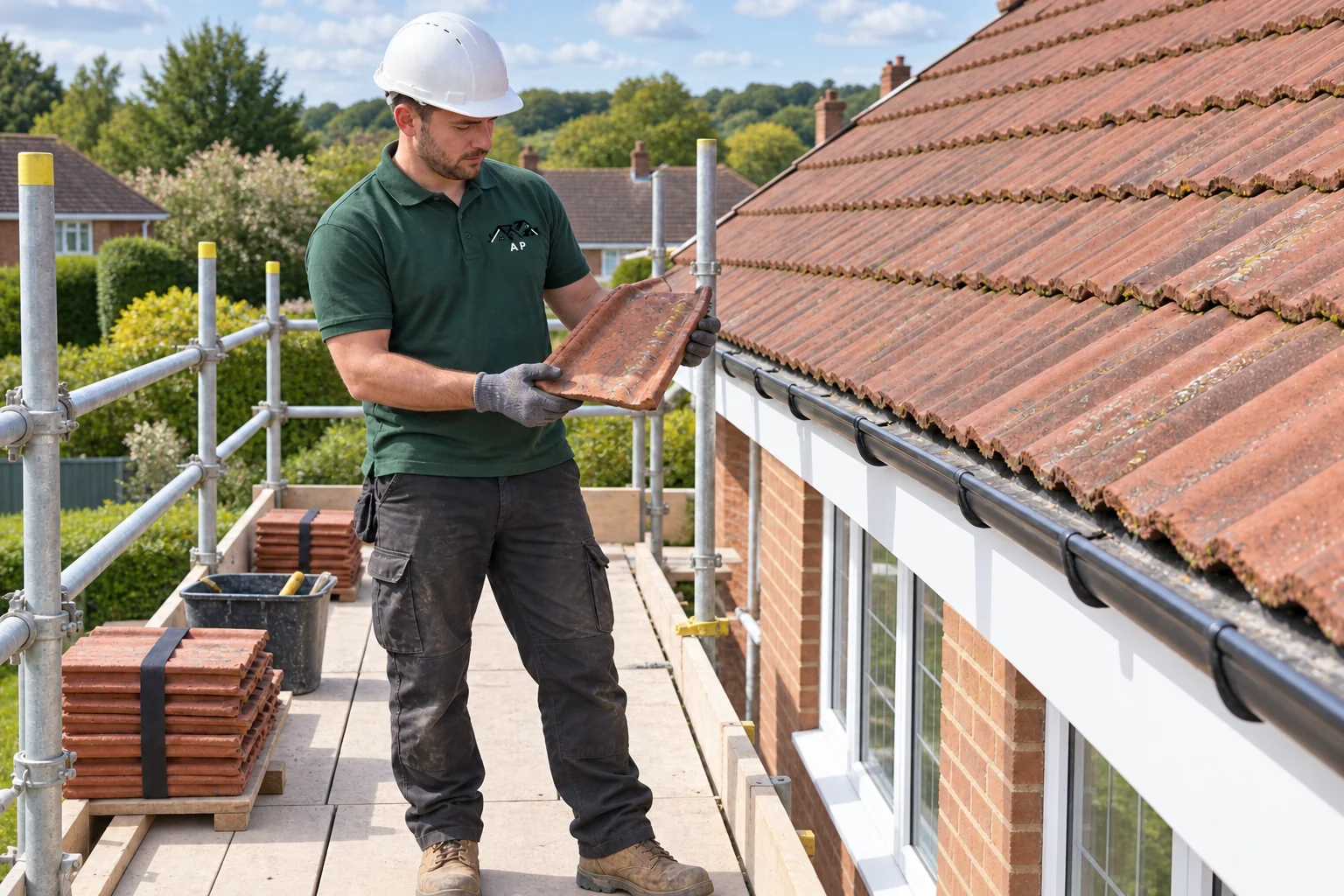
Maintenance on older roofs
An old roof can remain serviceable for a long time when isolated defects are repaired promptly. Historic England similarly encourages retaining sound roof fabric where practical rather than replacing it purely because of age.
The point of maintenance is to extend useful service life while being honest about when defects are becoming too widespread for patch repairs to remain economical.
A condition check with clear priorities
Not every weathered detail needs immediate work. A useful inspection separates loose or leaking elements from sound areas that can remain in service. The covering, ridges, hips, verges, valleys and flashings should be considered together. A blocked valley may explain a leak without requiring widespread tile replacement. Conversely, repeated slipped tiles across a slope may justify closer examination of fixings and battens. We explain what needs attention now, what can be monitored and what may be better combined with future planned work.
Coordinate maintenance with access already available
Scaffolding for chimney work or roofline replacement can provide an opportunity to inspect nearby details. That does not mean adding unnecessary work; it means deciding whether known defects can sensibly be addressed while safe access is in place. Before authorising extra tasks, ask for the scope and cost to be clear. If the roof is listed or retains significant original material, the inspection should also consider whether repair methods and replacements preserve its character.
Give us the history of the roof
Old repair invoices and photographs can reveal recurring problems or the age of replacement sections. Tell us whether damp appears after rain, whether tiles have moved before and whether other trades have recently been on the roof. The history can be as useful as one dry-weather inspection when deciding which details deserve attention.
Questions homeowners often ask
There is no universal annual service requirement for every domestic roof. Periodic checks, attention after severe weather and prompt investigation of visible changes are more useful than arbitrary work.
Yes where safe access and the scope allow. Drainage and roof-covering checks are often best considered together.
Not automatically. Light biological growth can be normal ageing. It becomes more relevant where it blocks drainage, lifts material, hides defects or the owner wants controlled cleaning for another reason.
Technical guidance and further reading
What affects the size and cost of the job?
Pitched-roof work is affected by roof size and pitch, but the number of valleys, hips, chimneys, rooflights and party-wall junctions can matter just as much. Matching an older tile or slate can also change material availability and labour.
- Roof area, pitch and number of slopes
- Tile or slate type and availability of compatible replacements
- Valleys, ridges, hips, verges, chimneys and rooflights
- Condition of battens, underlay and accessible timber
- Scaffolding, access and protection of lower roofs or conservatories
- Extent of local repair versus opening a larger area
A quote you can actually compare
A clear quote should say which coverings are being removed or retained, how the damaged area will be accessed, what happens to underlay or battens if found defective, and how key junctions will be weathered. That is more useful than comparing only the bottom-line number.
We prefer defined scopes to vague allowances. If an important part of the roof cannot be confirmed until material is lifted, that uncertainty should be explained before work begins rather than appearing as a surprise at the end.
What we inspect and work on
Tile and slate condition checks
Ridge, hip and verge checks
Valley and gutter clearing
Flashing inspection
Minor defect repairs
Related roofing services

More questions about this service
Does a maintenance check include every hidden layer?
No. A visual inspection cannot establish the condition of all concealed battens and underlay. Where a concern needs selective opening, that should be discussed as a separate investigative step.
Should all old mortar be replaced?
No. Sound mortar and stable details may remain serviceable. Loose units, deep erosion or active water entry justify a closer assessment of the bedding, fixing and repair method.