

We work on garages, extensions, dormers, porches and commercial flat roofs. The aim is never to sell the biggest job. It is to leave you with a roof that drains properly, stays weather-tight and is straightforward to maintain.
A good flat roof is not simply a waterproof sheet laid over timber. The deck, falls, insulation, vapour control, outlets, perimeter upstands and every penetration have to work as one build-up. If one of those details is wrong, the visible membrane can be blamed for a problem that actually starts underneath or at the edge.
Across Crawley and the surrounding Sussex and Surrey area we see flat roofs on garages, extensions, dormers, porches, bay windows and commercial buildings. Some need a local flat roof repair. Others need a new waterproofing system or a warmer, better-insulated roof build-up. The right answer depends on condition, drainage and what the roof is expected to do.
Choosing a flat roof system for the building, not the buzzword
EPDM rubber, GRP/fibreglass, reinforced bituminous felt, single-ply and liquid-applied systems can all be appropriate in the right situation. We look at roof size, shape, detailing, substrate condition, future access, insulation requirements and how many outlets, rooflights or abutments need to be weathered.
A simple garage roof with open edges is a different design problem from a complex extension roof boxed in by parapets and walls. Material choice matters, but the detailing and preparation beneath it are just as important.
- EPDM and other single-ply membranes
- GRP/fibreglass roof systems
- Modern multi-layer felt systems
- Liquid-applied waterproofing where suitable
- Warm-roof insulation and vapour-control layers
Falls, outlets and ponding water
Flat roofs are designed to drain, even though the fall can be visually subtle. We check whether the deck or tapered insulation directs water towards the outlets, whether the outlet is actually the low point and whether any backfalls have developed through movement or poor previous work.
Ponding does not automatically mean a roof has failed, but persistent standing water increases stress on vulnerable details and makes defects harder to ignore. Current UK flat-roof guidance puts strong emphasis on effective falls and drainage, so we treat the water route as part of the roof, not an afterthought.
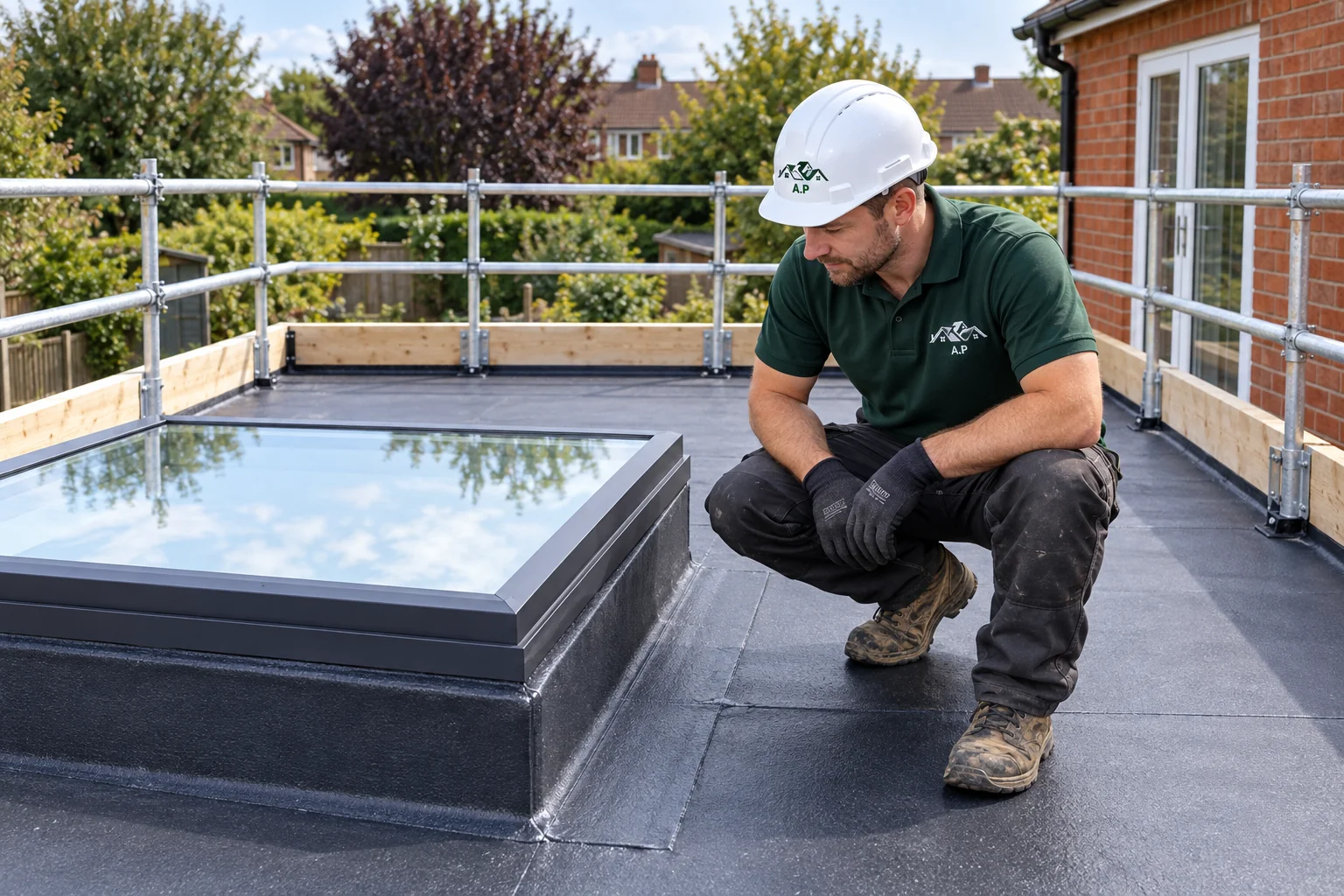
Warm roof, cold roof and condensation risk
Insulation changes the temperature and moisture behaviour of a roof. On many modern domestic flat roofs a warm-roof approach, with insulation above the structural deck and a suitable vapour-control strategy below, is often preferred because it keeps the deck warmer and reduces condensation risk when correctly designed.
Existing roofs are not all built that way. Before adding insulation or changing a covering we need to understand the existing deck, ceiling, ventilation and moisture route. Simply packing insulation into every void can create a new condensation problem while solving the old heat-loss problem.
Flat roof repair versus replacement
A split at an edge trim, isolated puncture, failed outlet detail or small localised seam defect may be repairable without stripping the whole roof. Widespread blistering, brittle felt, failing deck edges, repeated patching and multiple wet areas point in a different direction.
We explain what is local and what is systemic. That makes it easier to compare the cost of a proper repair with the cost and expected life of replacement rather than automatically choosing the cheapest line on the quote.
Maintenance after installation
Flat roofs benefit from simple inspection. Leaves around outlets, wind-blown debris, damage caused by other trades and blocked gutters can all create trouble on an otherwise sound membrane. Roofs that are not designed for regular foot traffic should not be used as storage or a terrace.
If a roof is under a manufacturer or contractor guarantee, any repair should also be considered in the context of those terms. Unapproved sealants or DIY patches can make a later warranty conversation much more difficult.
A garage roof and an extension roof need different decisions
An unheated garage may need a sound replacement deck and a well-detailed waterproof covering, while an occupied extension also needs careful thermal design. Rooflights, low window sills and doors opening onto the roof can restrict the height available for insulation and upstands. We establish these constraints before choosing the system. If water is repeatedly held at one edge, changing the membrane alone may leave the cause untouched. A useful flat-roof survey records the low points, outlet positions, deck condition and how the roof joins the walls.
What the finished specification should include
Ask for the waterproofing system to be named, together with the preparation, deck repairs, insulation and edge details included. The quotation should make clear whether the existing layers are being stripped or retained, and why an overlay is suitable if one is proposed. It should also explain treatment around rooflights and pipes, removal of waste and any access restrictions. A guarantee relates to a defined installation, so the documentation should identify the work covered and the maintenance conditions rather than offering an unexplained number of years.
Keeping the roof useful for longer
A flat roof may be designed for maintenance access without being suitable for regular occupation. Do not turn it into a terrace or store heavy materials on it without a separate design assessment. Plan future access for window cleaners, aerial installers and other trades, because sharp tools and dragged equipment can damage a sound membrane. Clear drainage and careful access are simple ways to protect the investment.
Questions homeowners often ask
Service life varies by system, exposure, detailing, maintenance and installation quality, so a single lifespan figure can be misleading. We would rather assess the actual covering, deck, edges and drainage than write off a roof based only on age.
Not universally. EPDM suits many simple membrane roofs, GRP can provide a rigid seamless finish on suitable substrates, and modern felt remains a proven system. Roof geometry, detailing, substrate and installer competence usually matter more than internet arguments about one material being “best”.
Sometimes an overlay is possible, but only when the existing build-up is suitable, dry enough and structurally sound. Trapping moisture or covering rotten deck is false economy, so the existing roof needs checking first.
Like-for-like repair or replacement will often not require a planning application, but changes to roof form, protected buildings and some alterations can change the position. Building Regulations can also apply depending on scope.
Technical guidance and further reading
What affects the size and cost of the job?
Flat-roof quotes are shaped by more than square metres. Roof shape, the number of outlets and penetrations, deck condition, insulation, perimeter upstands and how easily materials can be moved to the work area all affect the scope.
- Roof area and number of separate roof zones
- Condition of the deck and whether wet material must be removed
- Waterproofing system and preparation required
- Outlets, rooflights, wall abutments and awkward perimeter details
- Insulation or vapour-control upgrades
- Safe access, edge protection and waste removal
A quote you can actually compare
A useful flat-roof quote should identify the proposed system and, where relevant, the deck preparation, insulation build-up, outlet work, perimeter details and treatment of existing material. A single line saying “new flat roof” makes it difficult to compare two very different specifications.
We prefer defined scopes to vague allowances. If an important part of the roof cannot be confirmed until material is lifted, that uncertainty should be explained before work begins rather than appearing as a surprise at the end.
What this service covers
Leak tracing and targeted repairs
New flat roof installation
EPDM, felt and GRP options
Warm-roof insulation upgrades
Edge trims, outlets and flashing details
Garage, extension and commercial roofs
Signs it is worth getting the roof checked
Roof problems do not always arrive as a dramatic leak. These are common clues that the relevant part of the roof needs a closer look:
- Blistering, cracking or lifting at laps
- Water sitting on the roof long after rain
- Damp marks appearing around edges or ceiling corners
- Old felt becoming brittle or granular
- Repeated patch repairs in the same area
Related services and deeper guides

More questions about this service
Can a flat roof be used as a balcony?
Only if its structure, waterproofing, guarding, drainage and access have been designed for that use. A standard garage or extension roof should not be treated as a balcony simply because it looks level.
Will a replacement improve standing water?
It can, when the specification addresses the falls and outlets. A new covering laid over the same low spots may leave the drainage unchanged. We discuss the cause and practical options during the survey.