
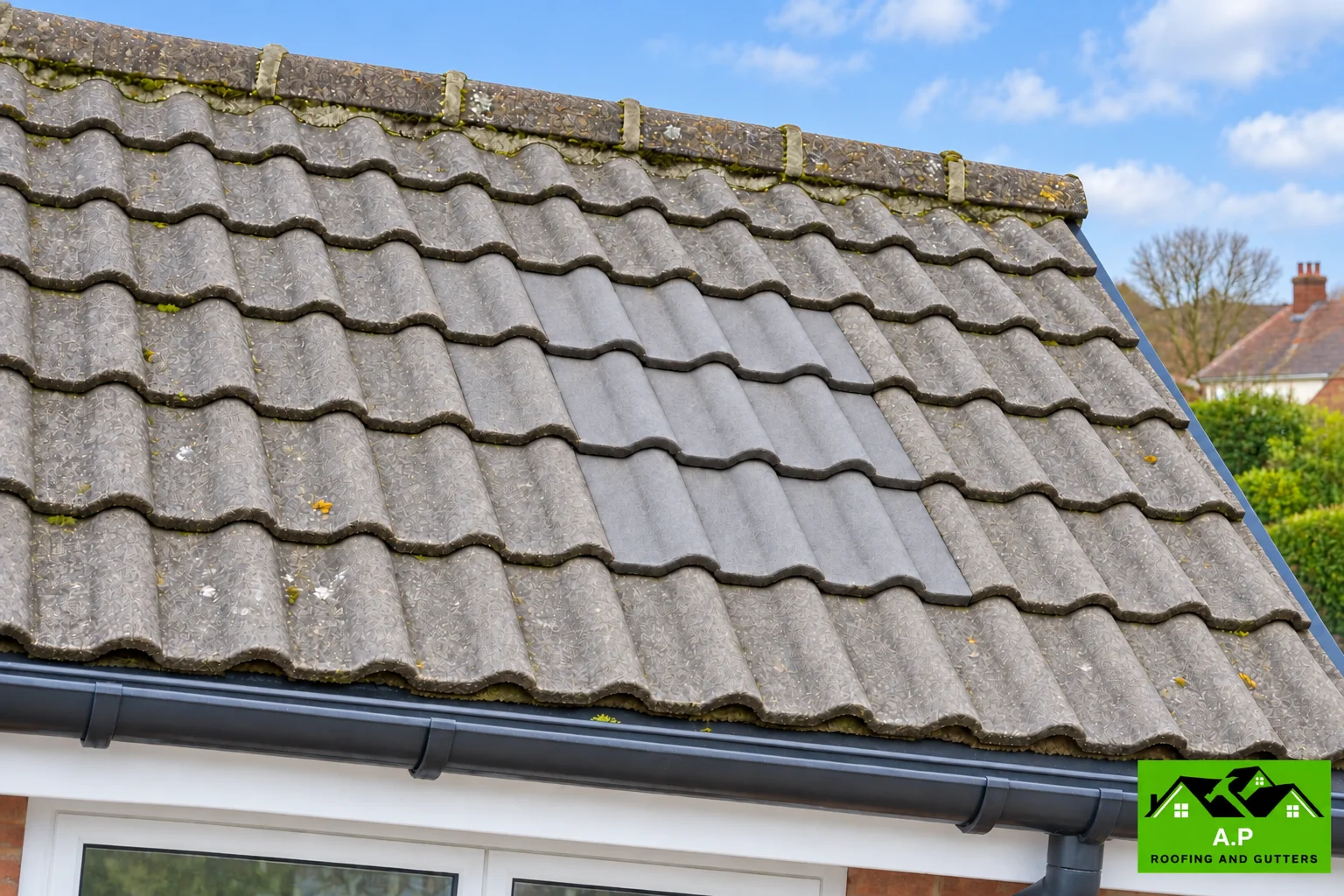
Pitched-roof repair can be as simple as replacing one damaged tile or as involved as rebuilding a valley, chimney abutment or failed section of underlay. The common thread is that the visible defect needs to be understood in the context of the surrounding roof.
We repair tiled and slate pitched roofs across Crawley with an emphasis on matching materials, secure fixing and weathering details that direct water back onto the roof covering where it belongs.
Slipped and broken coverings
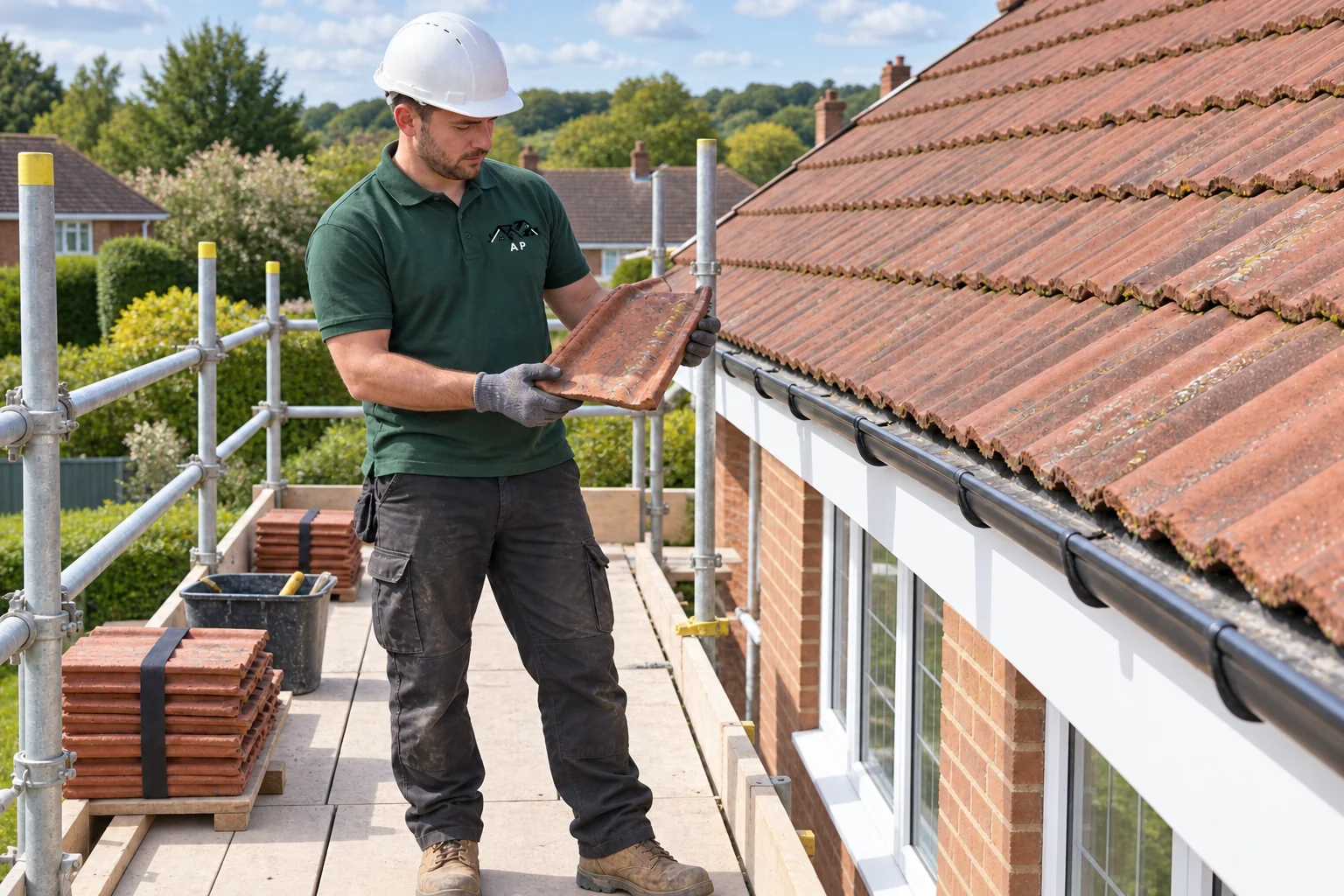
Individual tiles and slates fail for different reasons: impact, frost damage, corroded fixings, wind uplift, foot traffic or movement in the roof below. A replacement should match size and profile closely enough to maintain the correct lap and course.
Where several nearby coverings have moved, we look for the underlying reason rather than treating each one as an unrelated event.
Leaks at valleys and abutments
Valleys carry concentrated water and are vulnerable to debris, cracked lining, displaced tiles and poor previous patching. Abutments rely on correctly formed flashing and soakers or other weathering details.
Because these areas are junctions between materials, movement and incompatible repairs often show up here first.
Underlay and batten problems
Older underlay can tear or become brittle, but the external covering remains the primary defence against weather. If underlay failure is local and the covering is sound, selective repair may be possible. Widespread deterioration becomes more significant during a reroof decision.
Battens also need enough integrity to hold fixings. A tile cannot be safely re-fixed to timber that has decayed or split.
Repairing mortar details
Ridges, hips and verges on many existing roofs are mortar-bedded. Repairs require stable units, suitable bedding and removal of defective material rather than applying a cosmetic skim to a loose joint.
On some roofs a modern mechanically fixed detail may be considered during larger work, but that is a design choice rather than an automatic upgrade.
A sectional repair can sit between a patch and a reroof
Sometimes the fault extends beyond one tile but does not justify replacing every slope. A valley, dormer cheek or damaged section of underlay may be rebuilt as a defined area, retaining sound covering elsewhere. The transition between new and existing work is important: laps, fixings and water paths must remain continuous. We explain the boundary of the proposed repair and any limitations caused by older adjoining materials, so the scope is clear before access is arranged.
Matching means more than colour
A replacement tile that looks similar can still have the wrong interlock, nib or cover width. On slate, size, thickness and fixing method influence how the repaired area sits within the roof. We assess compatibility before choosing materials. Where a profile is discontinued, reclaimed stock or a wider sectional repair may be considered. The aim is a secure weathering detail with a reasonable visual match, without forcing an unsuitable product into the existing courses.
Checking the result after rain
The finished repair should restore the relevant covering and junction, not leave a temporary sheet or unsupported patch. Internal damp may take time to dry. Keep a record of any fresh wetting and the weather when it occurs, as a roof can have more than one entry point. We explain any surrounding defects identified but excluded from the agreed work.
Questions homeowners often ask
Yes, particularly in exposed weather or where the underlay below is damaged. The urgency depends on position, exposure and the condition of the secondary weathering layer.
Yes where deterioration is genuinely limited to one area. The junction with untouched roof needs careful detailing, and the broader condition should still be checked.
Repeated movement can point to failed bedding, poor previous repairs, exposed conditions or an unstable detail. We assess the ridge system rather than simply adding more mortar.
Technical guidance and further reading
What affects the size and cost of the job?
Pitched-roof work is affected by roof size and pitch, but the number of valleys, hips, chimneys, rooflights and party-wall junctions can matter just as much. Matching an older tile or slate can also change material availability and labour.
- Roof area, pitch and number of slopes
- Tile or slate type and availability of compatible replacements
- Valleys, ridges, hips, verges, chimneys and rooflights
- Condition of battens, underlay and accessible timber
- Scaffolding, access and protection of lower roofs or conservatories
- Extent of local repair versus opening a larger area
A quote you can actually compare
A clear quote should say which coverings are being removed or retained, how the damaged area will be accessed, what happens to underlay or battens if found defective, and how key junctions will be weathered. That is more useful than comparing only the bottom-line number.
We prefer defined scopes to vague allowances. If an important part of the roof cannot be confirmed until material is lifted, that uncertainty should be explained before work begins rather than appearing as a surprise at the end.
What we inspect and work on
Tile and slate replacement
Valley and abutment repairs
Ridge and hip repairs
Leadwork and flashing
Storm-damage repairs
Related roofing services

More questions about this service
Can you repair one slope and leave the rest?
Yes, where the condition and junctions make a sectional repair practical. The survey needs to establish how new work will connect with the retained slopes and whether their remaining condition supports that approach.
Why can a small repair still need scaffolding?
Safe access depends on height, pitch, edge risk and the work involved, not just the number of tiles. Conservatories and difficult approach routes can also affect the access arrangement.