
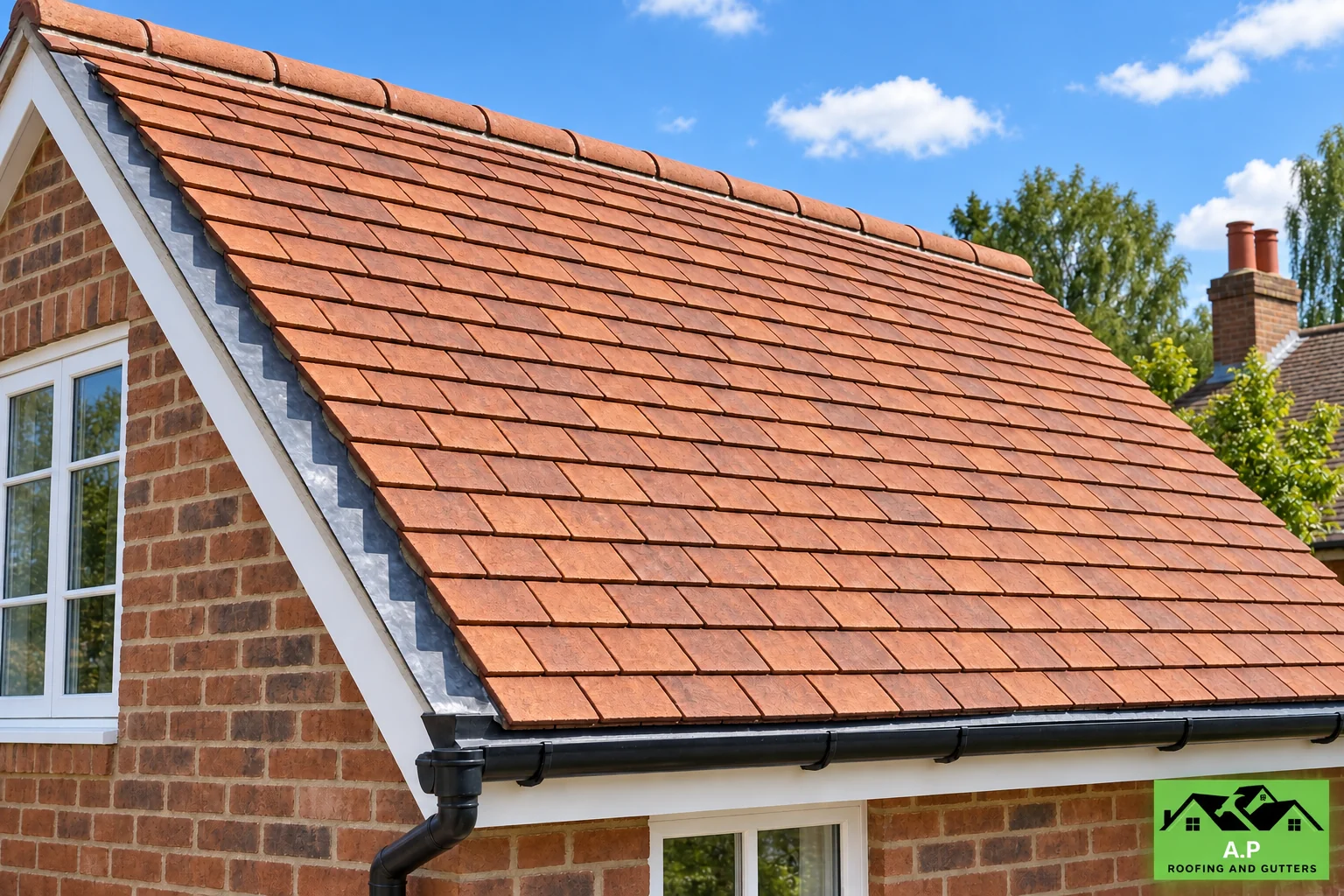
Broken, cracked or slipped roof tiles are common repair jobs, but the replacement still has to maintain the correct lap and fixing pattern. A tile that looks close enough from the ground may not interlock correctly with the existing roof.
We replace damaged clay and concrete tiles around Crawley and inspect the surrounding battens, underlay and fixings while the area is open.
Why tiles crack or slip
Storm impact, frost damage, foot traffic, failed fixings, movement and age can all damage roof tiles. In some cases the tile is intact but the fixing or batten has failed, allowing it to slide.
If several tiles in one area have moved, the repair should investigate the support and fixing pattern rather than simply pushing them back into place.
Matching profile and size
Interlocking tiles rely on a specific profile. Plain tiles rely on consistent gauge and headlap. Using the wrong replacement can disturb neighbouring units or reduce weather protection.
We identify the closest compatible tile and, where practical, use reclaimed or matching material for older roofs.
Checking what is under the tile
A broken tile can expose underlay to weather. If the underlay is torn, brittle or poorly supported, local secondary weathering may also need repair while the tile is removed.
Battens must be sound enough to take the replacement fixing. Rotten or split timber changes the scope of the job.
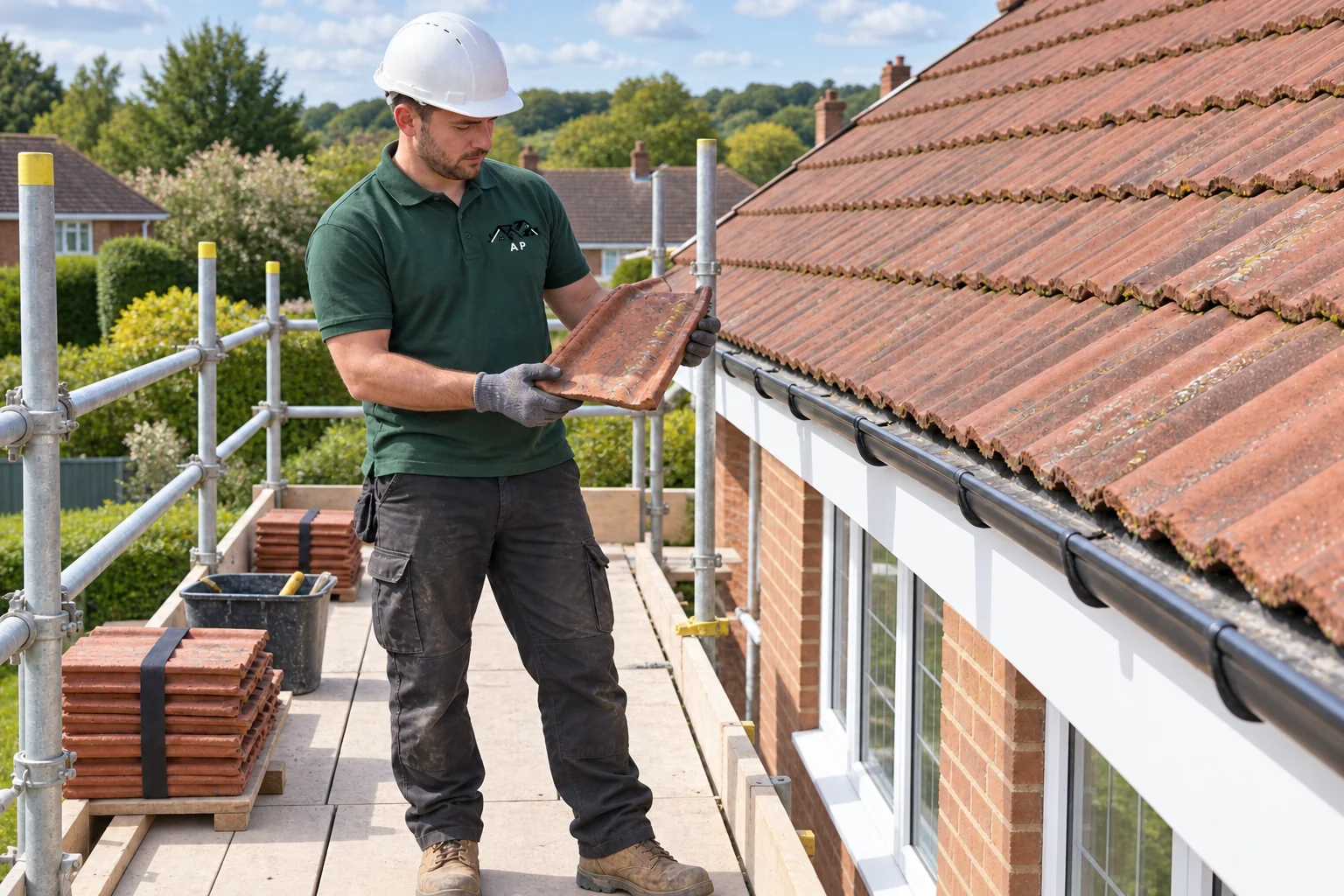
When repeated tile failures point to a bigger issue
One damaged tile is local. Regular slippage across the same slope can indicate nail sickness on slate, failing battens, an inadequate fixing pattern or broader movement.
We look for patterns so a sequence of small call-outs does not continue indefinitely if the underlying roof is telling us something larger.
One missing tile can expose more than the gap
The visible opening allows weather to reach the underlay, but wind may also have disturbed adjacent units. We check the neighbouring courses and the support beneath the replacement. If the batten is split or rotten, simply hanging a new tile in the same place does not restore a secure roof. At the eaves, ridge and verge, fixing and exposure can differ from the centre of the slope, so the location influences the repair method.
Why the exact profile matters
Interlocking concrete tiles can appear similar while differing in width, side lock and nib position. Plain tiles and slate use different laps and fixing arrangements. Where an old tile is available for identification, keep it safely on the ground rather than attempting to retrieve one from the roof. We assess suitable new or reclaimed replacements and explain any visible difference caused by weathering. A close colour match should not take priority over a compatible fit.
Look for a pattern of damage
A single impact break is usually a local issue. Repeated cracking in a line, movement after every windy period or several tiles found in the gutter deserves a wider check. Recent aerial, solar or chimney work can also be relevant because foot traffic or altered fixings may have affected the covering.
Questions homeowners often ask
Not normally. Tiles are fixed and lapped from outside, and roof access needs to be managed safely.
New material may initially look different because the surrounding roof has weathered. Correct profile and fit are more important than forcing an exact colour using an incompatible tile.
On some older slate roofs the metal fixings corrode and slates begin to slip even though the slate itself remains usable. Individual slates may be refixed; widespread fixing failure can eventually justify reroofing.
Technical guidance and further reading
What affects the size and cost of the job?
A repair price depends heavily on access and diagnosis. A ten-minute material repair may still need safe roof access, while an apparently small leak can take longer to trace if water has travelled through the roof build-up.
- Height, pitch and safe access method
- Time needed to trace the source of water
- Extent of damage once the area is opened
- Availability of matching tiles, slates or system-specific repair products
- Whether temporary weatherproofing is needed first
- Chimneys, valleys, rooflights or other complex details near the defect
A quote you can actually compare
For repairs, the quote should describe the defect being addressed and the repair area rather than promising to “seal roof” without explanation. Where the exact condition cannot be known until coverings are lifted, the assumptions should be stated clearly.
We prefer defined scopes to vague allowances. If an important part of the roof cannot be confirmed until material is lifted, that uncertainty should be explained before work begins rather than appearing as a surprise at the end.
What we inspect and work on
Broken tile replacement
Slipped tile refixing
Tile matching
Local batten and underlay checks
Ridge and verge checks nearby
Related roofing services

More questions about this service
Is a cracked tile urgent if there is no indoor leak?
It still needs assessment because water may be reaching the underlay or hidden layers. Urgency depends on the opening, weather, surrounding condition and any risk of material falling.
Can the tile be glued back together?
Replacement with a suitable unit is often the more dependable route. A surface bond does not necessarily restore the tile’s weathering, support or mechanical fixing.