
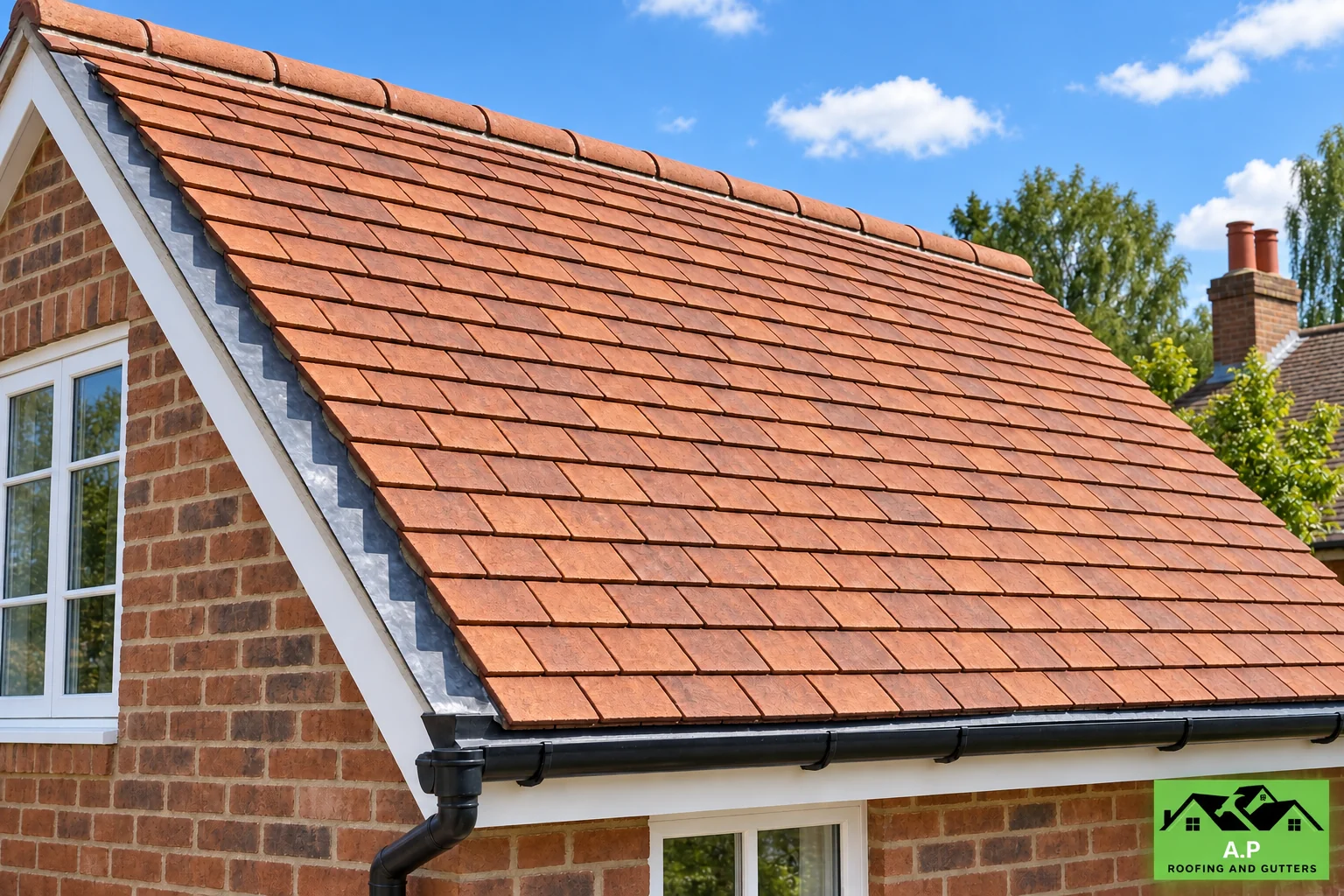
Roof tiling is a setting-out and fixing job as much as a material job. The tile profile, roof pitch, headlap, batten gauge, verge, ridge, valley and mechanical fixing strategy all need to line up so water sheds correctly and the finished roof looks intentional.
We carry out tiled-roof repairs and replacement around Crawley using clay or concrete tiles chosen to suit the building and roof geometry.
Clay tiles and concrete tiles
Clay and concrete coverings both come in many profiles and sizes. Plain tiles create a very different gauge and number of units from large-format interlocking tiles, while some low-pitch products are designed around specific headlap and fixing requirements.
On repairs, the exact profile matters because an apparently similar tile can sit poorly in the surrounding interlock.
Pitch, headlap and exposure
The minimum pitch printed for a tile is not an invitation to ignore exposure, rafter length or manufacturer requirements. The headlap and fixing specification should suit the particular roof.
On replacement roofs we set out courses before fixing so eaves, ridges and openings work without awkward cut rows or compromised laps.
Mechanical fixing and wind uplift
Modern tile fixing is designed around wind load as well as gravity. Nails, clips and the number of mechanically fixed tiles depend on the system and exposure.
This is especially relevant on edges, ridges and exposed elevations where wind suction is greater.
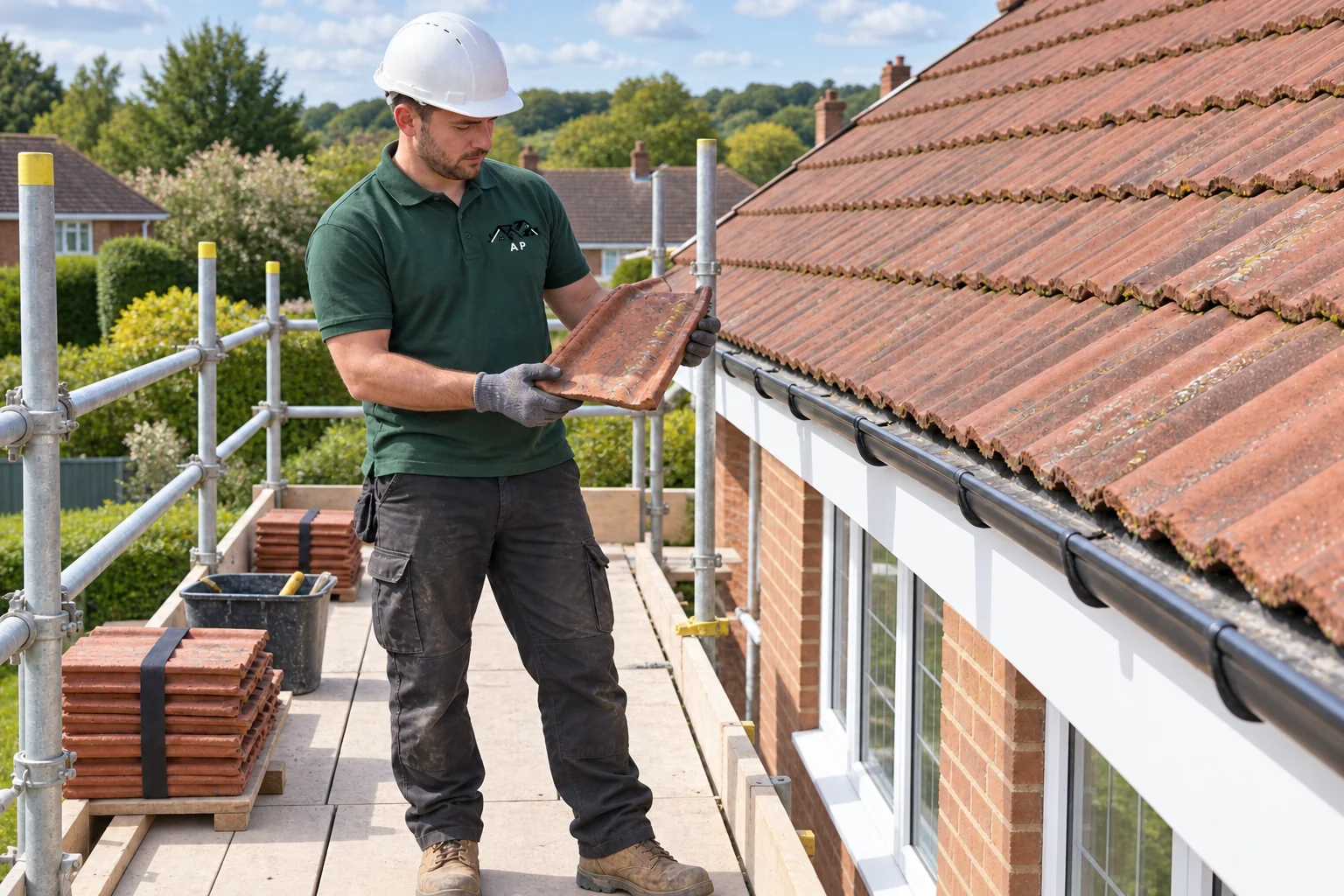
Matching an existing tiled roof
For local repairs we aim for a compatible tile and a tidy visual match. Weathering means a new tile may look brighter initially, but correct shape and interlock are more important than forcing a colour match with the wrong product.
On older or character properties, reclaimed tiles can sometimes be useful when they are sound and appropriate.
Setting out is what makes the finished roof look right
Tile courses need to work from eaves to ridge and around every valley, hip and opening. The gauge is set within the chosen product’s requirements, rather than stretched to avoid cutting a final course. At verges and abutments, suitable tile sizes and supported cuts help keep the detail both secure and tidy. On a replacement roof, we discuss the profile and finish early because a change from small plain tiles to large interlocking units substantially changes the building’s appearance.
Repairing a discontinued tile profile
Older roofs may use a tile no longer manufactured in exactly the same form. The first priority is to identify its shape, dimensions and fixing arrangement. Reclaimed material can be useful if it is sound, but a colour match alone is not sufficient. If compatible stock cannot be obtained, a larger defined section may need to be retiled with a suitable transition. We explain these options before ordering, rather than leaving a mixed patch that sits poorly in the surrounding courses.
Keep the product details after the job
A record of the tile manufacturer, profile and colour makes future repairs easier. Keep spare units where practical and store them safely at ground level. The fixing specification, ridge and verge components and any guarantee conditions also form part of the roof system, so those details deserve the same attention as the visible tile.
Questions homeowners often ask
Yes, provided the surrounding tiles and battens are sound and a compatible replacement can be fitted without damaging adjacent courses.
They have different appearance, weight, profiles and weathering characteristics. The right choice depends on the roof, local character, budget and specification rather than one being universally better.
The covering must be specified for the actual pitch and conditions. We do not reduce headlap or ignore manufacturer limitations simply to make a chosen tile fit a roof it was not designed for.
Technical guidance and further reading
What affects the size and cost of the job?
Pitched-roof work is affected by roof size and pitch, but the number of valleys, hips, chimneys, rooflights and party-wall junctions can matter just as much. Matching an older tile or slate can also change material availability and labour.
- Roof area, pitch and number of slopes
- Tile or slate type and availability of compatible replacements
- Valleys, ridges, hips, verges, chimneys and rooflights
- Condition of battens, underlay and accessible timber
- Scaffolding, access and protection of lower roofs or conservatories
- Extent of local repair versus opening a larger area
A quote you can actually compare
A clear quote should say which coverings are being removed or retained, how the damaged area will be accessed, what happens to underlay or battens if found defective, and how key junctions will be weathered. That is more useful than comparing only the bottom-line number.
We prefer defined scopes to vague allowances. If an important part of the roof cannot be confirmed until material is lifted, that uncertainty should be explained before work begins rather than appearing as a surprise at the end.
What we inspect and work on
Clay and concrete tiling
Replacement of damaged tiles
Extension and porch tiling
Ridge, hip and verge finishing
Tile matching where practical
Related roofing services

More questions about this service
Can two interlocking tile brands be mixed?
They should not be assumed interchangeable. Similar appearance does not guarantee compatible side locks, cover width or gauge. The actual products and roof detail need checking.
Why do new tiles look different from the old ones?
Weathering changes colour and texture. A technically compatible new tile may initially stand out, while reclaimed stock can offer a closer appearance when suitable material is available.