
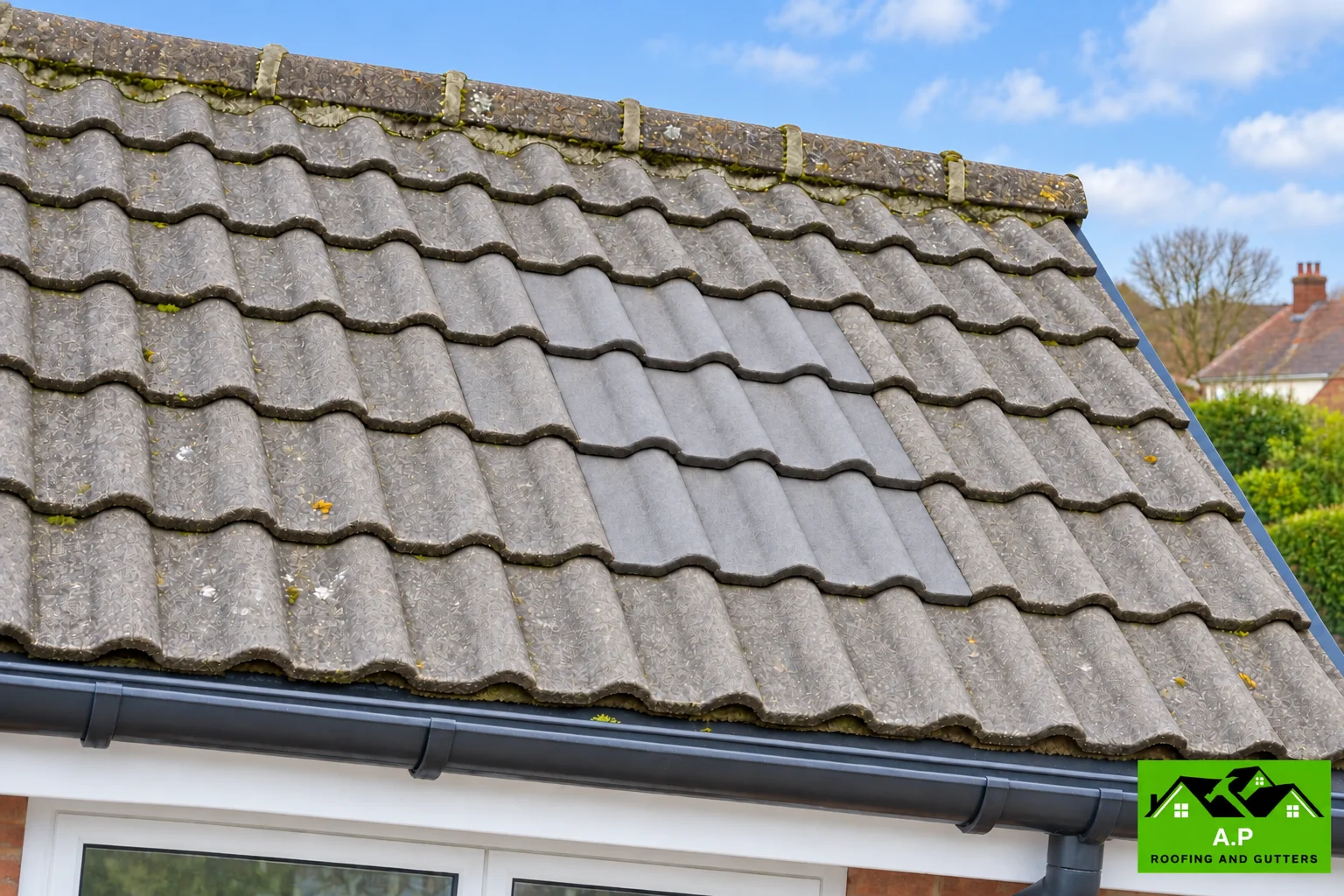
Small jobs are welcome. If a slipped tile or failed flashing detail is all that is wrong, that is what we will quote. If the wider roof is tired, we will show you why before discussing anything more substantial.
Roof repair is diagnosis first and materials second. A stain on a bedroom ceiling does not necessarily sit directly below the defect, and the most obvious cracked tile is not always the only route water is taking. We trace the weather path and check the surrounding details before deciding what to repair.
Our roof repair work across Crawley ranges from isolated tile and slate replacement to leaks around chimneys, valleys, leadwork, flat-roof edges and storm-damaged ridges. Where a local repair is enough, we keep it local. Where the evidence points to wider deterioration, we explain why.
How roof leak tracing works
Water can travel across underlay, along rafters, behind masonry and through insulation before it becomes visible. Useful clues include the weather direction, whether the leak appears immediately or hours later, the position of roof junctions above and any recent building work.
We inspect likely entry points in context: missing or cracked coverings, valley channels, abutments, chimney flashings, ridge and hip details, rooflights, vents, gutters and flat-roof outlets. The objective is a repair that removes the route of water rather than simply sealing the nearest visible gap.
Targeted repair versus repeated patching
A good small repair can buy many useful years when the surrounding roof is healthy. The same approach is poor value if the covering is failing in multiple places or if previous patches have become the dominant waterproofing method.
We look at how much sound roof remains around the defect. That gives a more honest basis for comparing a local repair, a larger sectional repair or planned reroofing.
Repairs after wind and storms
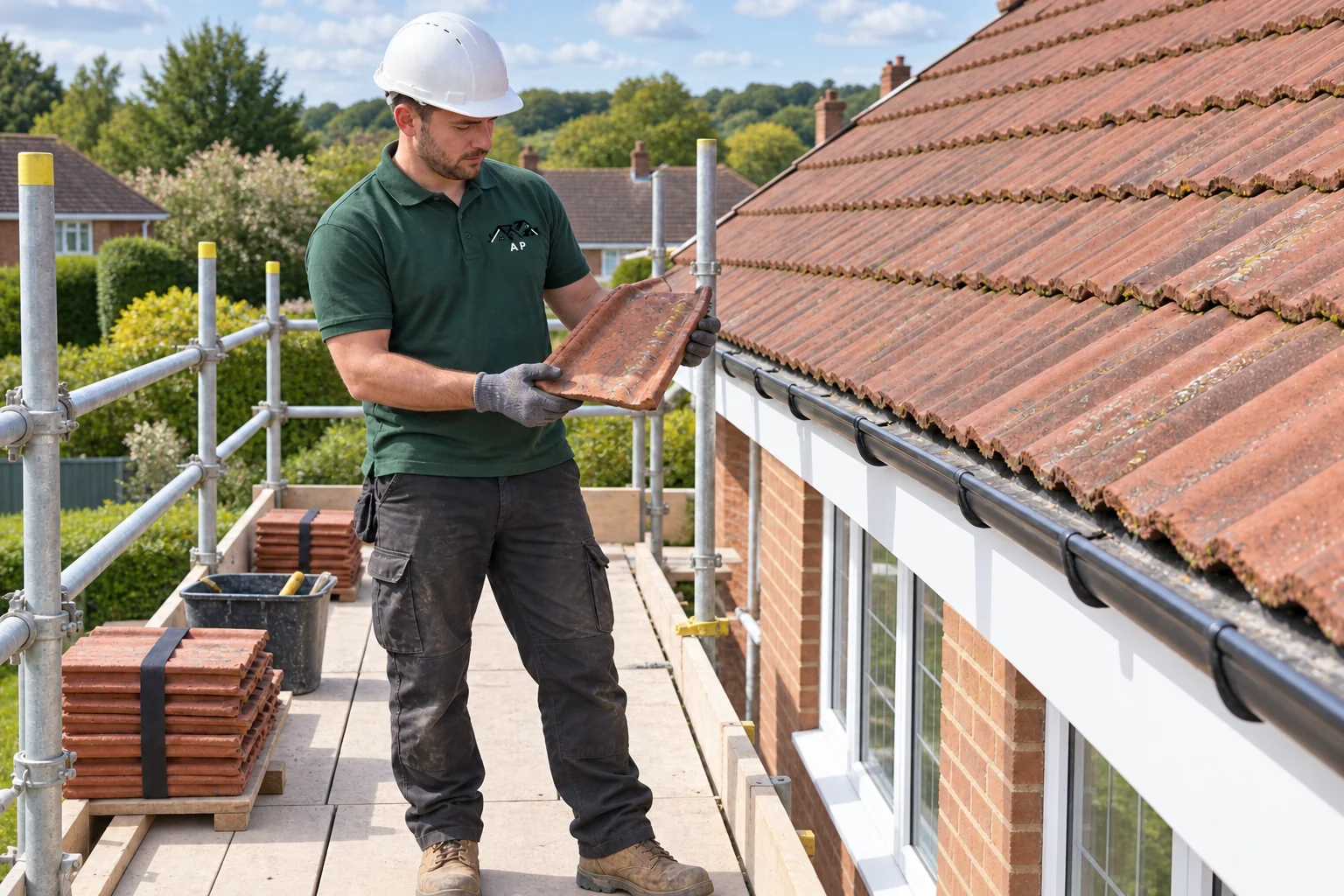
Storm damage can leave coverings loose even where they have not yet fallen. Tiles, ridge units, flashings and gutters should be checked from a safe position after severe weather, especially if debris is found on the ground.
Immediate work may be limited to making an area safe and weather-tight. The permanent repair can then be carried out once the roof condition and material availability are understood.
Older roofs and matching materials
With older tiled or slate roofs, matching size, profile and weathering characteristics matters. A visibly different replacement is not automatically wrong, but forcing a near-match into incompatible courses can create poor laps and fixing problems.
Historic England encourages repair of sound older roof fabric where practical. That principle also makes economic sense on many ordinary homes: preserve what is working and intervene where the fault is.
Safety and access are part of the repair
Roof work is not a safe DIY inspection task. HSE guidance treats roof work as high risk even when the job only takes minutes. The right access method depends on roof height, pitch, surface, edge risk and the duration of the work.
For property owners, the safest useful information is usually available from the ground or inside the loft. Do not climb onto a wet, damaged or unfamiliar roof to take photos for a quote.
What a useful repair survey should establish
The first question is whether the defect is isolated. We look at the surrounding covering and the supporting detail, not just the obvious gap. A cracked tile over sound battens is a different job from several slipping courses over deteriorated timber. On a flat roof, a small puncture in a serviceable membrane differs from widespread cracking and trapped moisture. The proposed repair should identify the area being treated and any neighbouring defects that are excluded or need monitoring.
Three practical routes after inspection
A local permanent repair is appropriate where the defect can be rebuilt against sound material. A sectional repair addresses a larger valley, slope or roof junction while retaining the rest. Planned replacement becomes a stronger option when several layers or details have reached the end of their useful condition. Temporary weatherproofing is a separate measure to reduce immediate ingress until proper work can be completed. We explain which route is being quoted and why, so a short-term patch is not mistaken for a complete solution.
Prevent the next avoidable call-out
Once a repair is complete, keep drainage clear and tell later trades where the repaired detail is located. Avoid new penetrations or incompatible coatings without checking the roof system. Record any fresh water marks and whether they coincide with rainfall. These observations help determine whether an old stain is drying or a separate defect still needs attention.
Questions homeowners often ask
Some emergency weatherproofing can be possible, but permanent repair quality depends on the material and safe working conditions. We do not force unsuitable work simply because it is raining.
The original repair may have treated a symptom, the adjacent material may have continued to deteriorate, or movement may have opened a rigid patch. We assess the whole detail rather than automatically repeating the same repair.
Most ordinary repairs and maintenance will not require an application, but the position changes with larger-scale reroofing, structural alteration, significant changes in covering or other regulated work.
If you may make a claim, photograph visible damage safely and check your insurer’s process before authorising non-emergency work. Urgent make-safe work may still be necessary to limit further damage.
Technical guidance and further reading
What affects the size and cost of the job?
A repair price depends heavily on access and diagnosis. A ten-minute material repair may still need safe roof access, while an apparently small leak can take longer to trace if water has travelled through the roof build-up.
- Height, pitch and safe access method
- Time needed to trace the source of water
- Extent of damage once the area is opened
- Availability of matching tiles, slates or system-specific repair products
- Whether temporary weatherproofing is needed first
- Chimneys, valleys, rooflights or other complex details near the defect
A quote you can actually compare
For repairs, the quote should describe the defect being addressed and the repair area rather than promising to “seal roof” without explanation. Where the exact condition cannot be known until coverings are lifted, the assumptions should be stated clearly.
We prefer defined scopes to vague allowances. If an important part of the roof cannot be confirmed until material is lifted, that uncertainty should be explained before work begins rather than appearing as a surprise at the end.
What this service covers
Leak investigation
Broken and slipped tiles
Storm and wind damage
Flat roof punctures
Lead flashing repairs
Ridge, hip, valley and verge repairs
Signs it is worth getting the roof checked
Roof problems do not always arrive as a dramatic leak. These are common clues that the relevant part of the roof needs a closer look:
- New ceiling stains or damp patches
- Tiles or slate visible on the ground
- Drips during wind-driven rain
- Water around chimneys or roof junctions
- Loose mortar, ridge or verge pieces
Related services and deeper guides

More questions about this service
Can you quote from photographs alone?
Photos can help identify the roof type and likely access, but they may not show concealed damage or the full water path. We confirm when an inspection is needed before a reliable scope can be priced.
Does a repair guarantee cover the whole roof?
A local repair normally relates to the defined work carried out, subject to its written terms. It should not be assumed to renew or guarantee unrelated older parts of the roof.