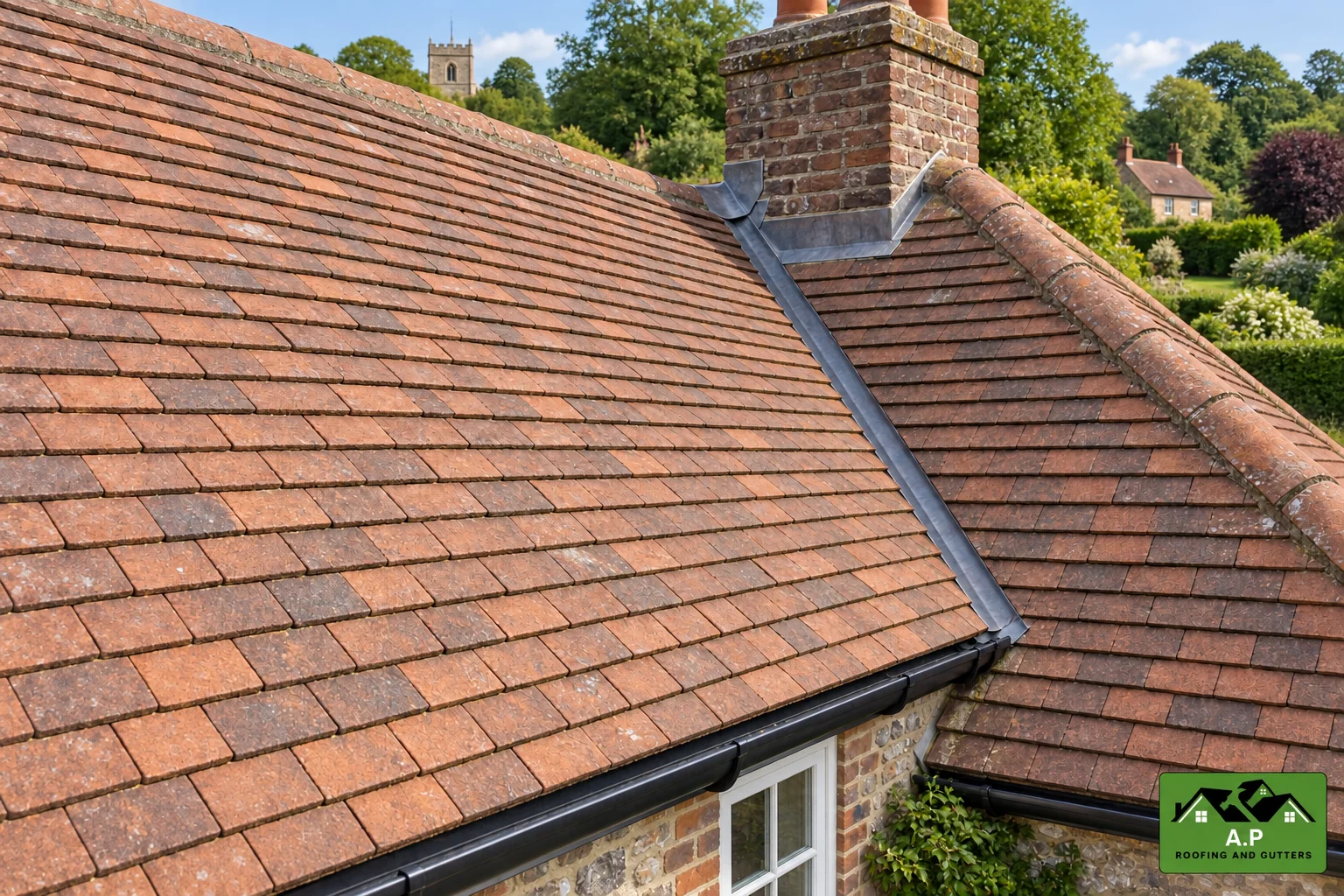
Roof moss is not automatically a defect. Light to moderate biological growth is common on older, shaded tiled roofs, and aggressive cleaning can cause more damage than leaving it alone. The decision to remove moss should be based on drainage, tile condition and the amount of growth, not fear-based sales claims.
Where removal is useful around Crawley, we choose a method that respects the roof covering and safe access requirements.
When moss becomes a practical problem
Heavy moss can shed into gutters and outlets, hold debris in valleys or obscure cracked and slipped tiles. Growth around drainage details therefore deserves attention even when the rest of the roof can be left alone.
Marley notes that low to moderate growth is often part of normal ageing and does not automatically harm tiles or slates.
Why we avoid routine high-pressure washing
High-pressure water can damage tile surfaces, force water beneath laps and flood roof spaces or gutters with debris. Tile manufacturers commonly advise against using pressure washers as the default roof-cleaning method.
Older, weathered or delicate coverings deserve particularly conservative treatment.
Manual removal and controlled treatment
Where appropriate, moss can be reduced using hand tools and controlled methods that minimise damage to the covering. Any chemical treatment needs careful selection and protection of people, pets, plants and drainage.
Cleaning is also an opportunity to inspect the now-visible tiles for cracks or movement.
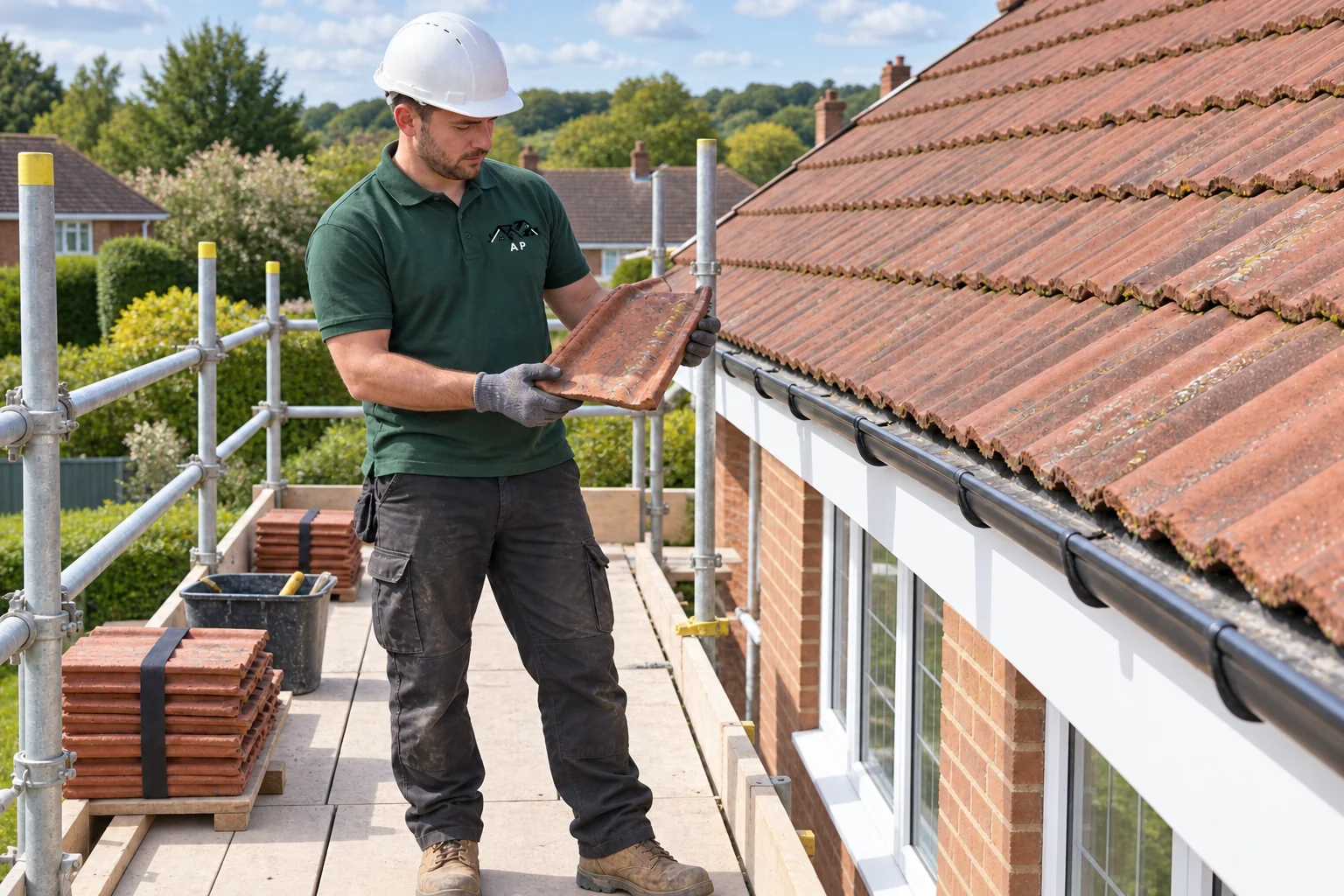
Clearing the drainage afterwards
Dislodged moss often ends up in gutters and downpipes. Those should be checked as part of the job so cleaning the roof does not simply move the blockage lower down the system.
On flat roofs and valleys, outlets deserve particular attention.
Setting realistic expectations
A cleaned roof will weather again. Shade, orientation, tree cover and local moisture affect how quickly moss and lichen return. We do not sell cleaning as a permanent transformation of an ageing roof or as a substitute for actual repair.
Decide whether removal is worthwhile
The amount of growth matters less than what it is doing. Loose moss repeatedly blocking gutters, material accumulating in valleys or growth concealing damaged tiles can justify cleaning. A light covering on a sound roof may not require intervention. We look at tile condition, pitch, access and the surrounding drainage before suggesting a method. If the roof is fragile or already deteriorating, repair may be the priority and an aggressive clean may shorten its useful life.
Control the debris as well as the cleaning
Moss removal can release a large volume of material. The work should protect gutters, outlets, neighbouring surfaces and planting, then clear the drainage routes afterwards. Hand removal needs care at tile edges and laps; any treatment must be suitable for the material and used according to its instructions. A roof should not be described as permanently moss-free after one visit. Shade, nearby vegetation and exposure influence how quickly growth returns, so the most useful result is controlled cleaning without damaging the covering.
What to look for after cleaning
Once growth is reduced, cracks or displaced units may become easier to see. Those defects need their own repair assessment. Cleaning does not renew worn fixings or restore a failing membrane. Keep the work description so you know which drainage areas were cleared and whether further tile or roofline work was recommended.
Questions homeowners often ask
Light growth is often harmless. Heavy growth can contribute to blocked drainage and can hide defects, but removal methods themselves can damage tiles if too aggressive.
We generally avoid high-pressure washing roof tiles because manufacturers warn it can damage surfaces and force water beneath laps.
Only if blockage was causing overflow. Cleaning does not repair cracked tiles, failed flashing or defective underlay.
Technical guidance and further reading
What affects the size and cost of the job?
Cleaning prices depend on roof area, pitch, access, the fragility of the covering and how much debris must be controlled and removed. The safest method may also be slower than an aggressive wash that risks damaging the roof.
- Roof area and pitch
- Tile or surface condition
- Amount and type of moss, lichen or dirt
- Safe access and protection of people or neighbouring property
- Gutter and outlet clearance after cleaning
- Need for low-impact manual or chemical treatment instead of pressure
A quote you can actually compare
The quote should tell you the proposed cleaning method and what happens to loosened debris. If the process relies on high pressure, ask why that method is suitable for the exact roof covering rather than assuming stronger cleaning is automatically better.
We prefer defined scopes to vague allowances. If an important part of the roof cannot be confirmed until material is lifted, that uncertainty should be explained before work begins rather than appearing as a surprise at the end.
What we inspect and work on
Manual moss removal where suitable
Gutter clearing after work
Tile condition checks
Care around ridges and flashings
Advice on repeat growth
Related roofing services

More questions about this service
Will cleaning change the colour of the tiles?
It can reveal the underlying weathered surface, but it should not be sold as a guaranteed return to the original colour. Different areas weather differently, and cleaning is not a substitute for replacing damaged tiles.
Can moss be removed without walking across the roof?
The access method depends on the roof and the work required. We assess suitable equipment and protection before starting; fragile or unsafe coverings should not be used as a working platform.