
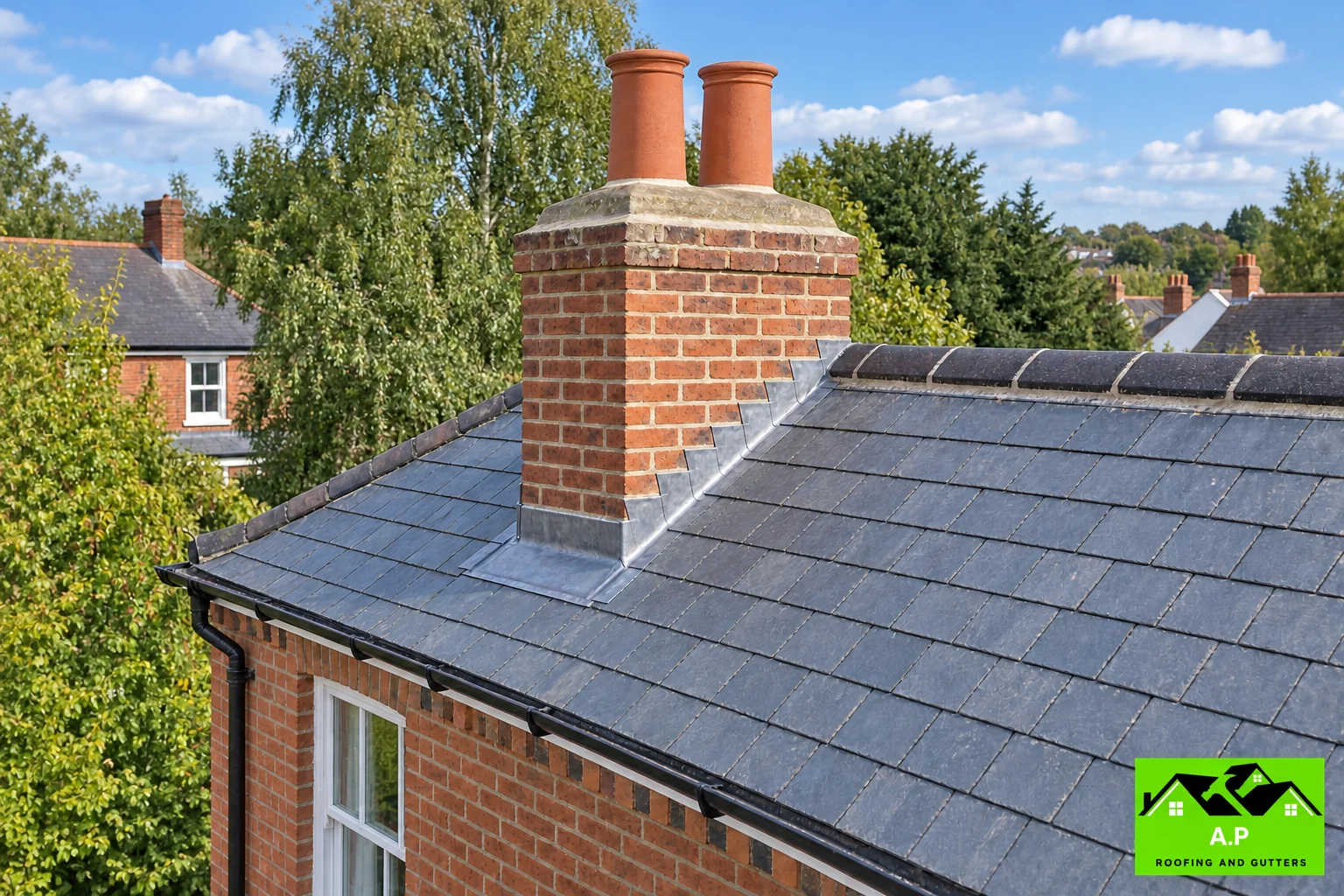
The work centres on the junction between a traditional brick stack and the slate covering. The two clay pots retain the chimney’s character, while carefully formed lead at the base directs water back onto the roof and around the stack.
The chimney masonry
The stack combines exposed brickwork, mortar joints and flaunching around the pots. These surfaces need to shed water and remain stable. Repair decisions should distinguish weathered pointing from movement or damaged brick faces, because a surface finish alone cannot correct a structural defect.
Lead at the roof junction
The front apron, stepped side weathering and back gutter perform different jobs. They need appropriate support, laps and allowance for movement. The slate courses and lead are detailed together so water does not collect at the high side or track behind the visible flashing.

Retaining the roof character
The natural slate and brick tones remain the main visual features. Local weathering work should fit the existing coursing and roof proportions. New lead will change appearance as it weathers, so the shape and drainage of the detail matter more than an immediate colour match.
Planning similar chimney work
An inspection needs to consider all faces of the stack and the roof behind it. Safe access can be a significant part of the job. Tell the roofer whether the chimney serves a working appliance and whether previous repairs have addressed pointing, pots or leadwork.
